
Building on Your Own Land: The Indie Author’s Guide to Direct-to-Reader Success
If you’re an indie author today, you’ve likely felt the weight of “rented land.” You spend months, maybe years, crafting a world, only to hand over the keys to a third-party platform that controls your price, your data, and your access to your own readers.
In the publishing world of 2026, the traditional path of relying solely on Amazon’s ecosystem is no longer the “safe” route. Algorithms shift. Ad costs skyrocket. Retailers change their terms overnight. When you build your entire career on someone else’s platform, you aren’t just selling books; you’re building their business, not yours.
To achieve long-term success, you need to start building on your own land. This means moving toward a direct-to-reader marketing model that prioritizes ownership and direct connection over platform dependency. Let’s explore how you can reclaim control of your author career.
The Trap of the Algorithm
For years, the promise of self-publishing was simple: upload a file, hit “publish,” and let the marketplace do the work. But as the market has matured, that marketplace has become more crowded and more expensive.
When you rely exclusively on retail giants, you face three primary risks:
- Data Blindness: You don’t know who your readers are. You get a sales report, but you don’t get an email address. You can’t follow up with them when your next book launches unless you pay for ads to find them again.
- Margin Compression: While 70% royalties sound great compared to traditional publishing, that number is often eroded by delivery fees, advertising costs, and platform-mandated discounts.
- Algorithmic Volatility: A single change to a search algorithm can tank your visibility overnight. If your traffic source is a black box you don’t control, your income is always at risk.
The solution isn’t necessarily to leave these platforms: they are still excellent for discovery. The solution is to change how you use them. You should view marketplaces as a top-of-funnel discovery tool, while your primary author branding strategy focuses on moving those readers to a space you own.
The Foundation: Your Email List
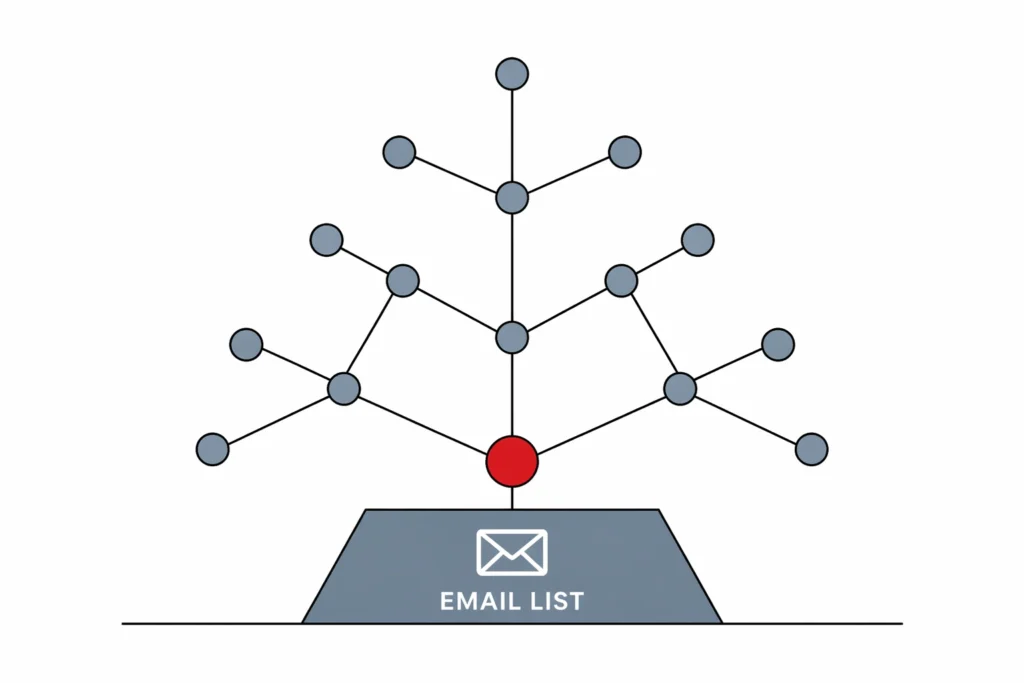
In 2026, the most valuable asset an author owns isn’t their backlist: it’s their mailing list. This is the only channel where you have a 1-to-1 relationship with your audience that cannot be throttled by an algorithm.
Successful authors are shifting their focus from “collecting followers” on social media to “building a tribe” via email. According to data from the Alliance of Independent Authors, authors with email lists exceeding 15,000 subscribers earn significantly more: often up to 20 times more: than those with smaller, unengaged lists.
How to Build Your Owned Foundation:
- Offer a “Lead Magnet”: Give readers a reason to sign up. This could be a prequel novella, a deleted scene, or a “world bible” for your series.
- Prioritize Direct Sign-ups: Every book should have a clear, enticing call-to-action in the front and back matter that leads directly to your sign-up page.
- Automate Your Welcome: Don’t just collect emails. Build an automated sequence that introduces readers to your brand, your world, and your voice. This is where effective branding strategies come into play: consistency in your tone and message builds the trust necessary for direct sales.
Owning the Transaction: The Rise of Direct Sales
Selling directly to readers via your own website used to be a technical nightmare. Today, platforms like Shopify, Payhip, and WooCommerce have made it the most strategic move an indie author can make.
When you sell a book directly from your site, you aren’t just getting a higher royalty (often 90% or more after processing fees). You are capturing the customer’s data. This allows you to build a sophisticated direct-to-reader marketing engine.
Why Direct Sales Matter Now:
- Higher Margins: By cutting out the middleman for your most loyal fans, you keep more of every dollar.
- Special Editions: You can sell products that marketplaces don’t support well, such as signed hardcovers, limited edition “loot boxes,” or digital bundles.
- Instant Payouts: While retail platforms often hold your money for 60 days, direct sales platforms typically pay out within days, significantly improving your cash flow.
- Bundling and Upselling: If a reader buys Book 1, you can immediately offer them a discount on the rest of the series or a piece of merchandise. You control the checkout experience.
To see how we help businesses structure these kinds of strategic funnels, you can take a look at our comprehensive marketing and PR services.
Crafting Your Author Branding Strategy
Your brand is more than your cover art; it’s the promise you make to your readers. In a direct-to-reader world, your brand is what differentiates you from the millions of other titles on a generic retail shelf.
If people don’t understand what makes your stories unique, they won’t go through the extra step of buying from your website. You need to position yourself as an authority in your niche or a master of your specific “vibe.” This is where PR and branding can transform your business from a simple book seller to a literary brand.
Key Elements of a 2026 Author Brand:
- Direct-to-Reader Exclusives: Create “Direct First” windows where your newsletter subscribers can buy your new release two weeks before it hits Amazon.
- Community-Led Launches: Use platforms like Kickstarter or Patreon to involve your readers in the creative process. This turns “customers” into “patrons.”
- Cross-Channel Consistency: Whether a reader sees your post on BookTok or opens your email, the visual and tonal identity should be unmistakable.

Let’s Take a Closer Look at the “Hybrid” Model
The most successful indie authors in 2026 aren’t deleting their Amazon accounts. Instead, they are using a hybrid model that maximizes both reach and profit.
- Retailers for Discovery: Use the wide reach of Amazon, Kobo, and Apple Books to find new readers. Often, this means keeping your first-in-series book or a “perma-free” title on these platforms to act as a billboard.
- Your Store for Retention: Once a reader is “in,” move them to your ecosystem. Offer your sequels, your special editions, and your community access through your own storefront.
This strategy protects you. If a retailer decides to change their royalty structure or ban a specific trope, your business doesn’t disappear. You still have your list, your store, and your direct connection to the people who love your work.
Build for the Long Term
Building on your own land takes more effort than simply clicking “upload” to a retail dashboard. It requires learning new tools, managing customer service, and taking a more active role in your marketing strategy.
However, the payoff is a resilient, profitable, and sustainable career. By focusing on author branding strategy and direct-to-reader marketing, you stop being a tenant on someone else’s platform and start becoming the owner of your own literary empire.
If you’re ready to stop hoping the algorithm picks you and start building a brand that demands attention, it might be time to rethink your PR and branding approach. In a world of noise, ownership is the only true competitive advantage.

