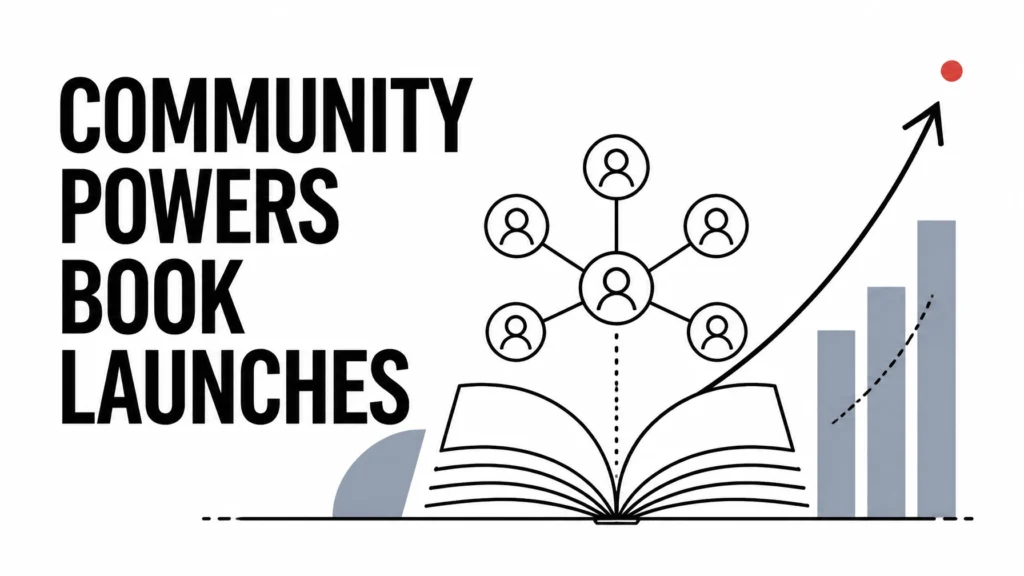
The New Era of Literary PR: Crowdfunding and Community-Led Book Launches
If you’re launching a book today, the old playbook can feel like a dead end: send a few pitches, hope for a review, run some ads, and pray the algorithm cooperates.
But the market’s shifted. Readers don’t just buy books, they back creators, join communities, and share projects they feel part of. That’s why crowdfunding and community-led launches aren’t just funding mechanisms anymore. They’re a modern PR strategy.
Let’s explore how authors and publishers can combine crowdfunding momentum with smarter media relations services, credible press release distribution services, and long-term reputation management services, so your launch isn’t a one-week spike. It’s a platform-building moment.
The problem: Great books still don’t get seen
You can write an excellent book and still struggle to earn attention because:
- Traditional media has fewer book slots than ever.
- Retail discovery is crowded and inconsistent.
- “Launch day” marketing often fades fast without sustained visibility.
- Many campaigns focus on selling, not story, and PR runs on story.
If your audience doesn’t understand why your book matters right now, they won’t talk about it. And if people aren’t talking, media won’t care.
The reframe: Crowdfunding isn’t just money, it’s proof, story, and leverage
Crowdfunding works as PR because it creates public traction you can point to. Funding progress, backer comments, stretch goals, special editions, these are all news signals.
Instead of pitching from a cold start, you’re pitching from momentum:
- “Funded in 24 hours.”
- “Hundreds of readers backed this before publication.”
- “A community brought this book to life.”
That’s social proof, and it gives your launch a narrative that journalists, podcasters, bloggers, and partners can actually use.
Crowdfunding also helps you build direct relationships and higher-margin direct sales, an angle many creators use to avoid relying only on traditional retailer visibility (for example, see author insights on Kickstarter launches discussed by The Creative Penn: https://www.thecreativepenn.com/2023/01/24/why-im-launching-my-book-on-kickstarter-and-not-on-the-usual-stores/).
Crowdfunding as a PR engine (not a side tactic)

Most crowdfunding campaigns underperform because they’re treated like a payment page. A strong campaign is a campaign, with positioning, messaging, and media angles built in.
Here’s how to structure it so it supports PR outcomes.
1) Lead with a clear hook
Ensure your campaign communicates the “why now” in one sentence.
Examples:
- “A debut novel reclaiming untold immigrant histories, funded by the readers who want it on shelves.”
- “A practical leadership book built from real operator lessons, backed by the community it serves.”
This hook becomes the core of your media pitching, your press release, and your website copy.
2) Build rewards that create coverage opportunities
Include rewards that are inherently newsworthy and easy to talk about:
- Limited-run hardcovers or special editions
- Signed bundles for book clubs
- Behind-the-scenes “process” updates
- Live virtual readings or Q&As
- Partner add-ons (a nonprofit tie-in, a workshop, a community event)
The goal isn’t “more stuff.” It’s more story.
3) Treat your pre-launch as the real launch
Maintain a pre-launch runway (often 6–12 weeks) where you:
- Build your email list
- Warm up your social channels
- Tease cover reveals or excerpt drops
- Line up early blurbs and podcast interest
Campaign timing matters, too. Many creators plan launches mid-week and avoid major holiday noise to improve performance (timing considerations discussed here: https://theinkfluence.com/the-best-time-to-launch-crowdfunding-campaign-book/).
4) Engineer shareability
Encourage your community to act like a street team without making it awkward.
Build simple assets:
- A “share pack” (5 captions + 3 images)
- A one-page campaign summary
- A short “what to say” guide for supporters
When you make sharing easy, your backers do what ads can’t: they create trusted referrals.
Where a public relations agency fits in this new model
Crowdfunding can build momentum, but PR turns that momentum into earned credibility and longer-term visibility.
A strong public relations agency doesn’t just “send a press release.” It helps you translate campaign traction into storylines that media will actually cover, then connects the dots across PR, branding, and marketing.
That matters because most authors don’t have a visibility problem. They have a positioning problem:
- Journalists don’t know where you fit.
- Readers don’t know why it’s for them.
- Partners don’t know how to introduce you.
PR solves that by making your message easy to repeat.
Media relations for community-led book launches

You don’t need “more press.” You need the right press, coverage that matches your genre, your themes, and your business goals.
Use these media relations moves.
1) Segment your target media list
Include:
- Genre-specific podcasts and newsletters
- Trade outlets (publishing/industry coverage)
- Local media (especially if your story is location-based)
- Cause-aligned outlets (if your book ties to an issue)
- Creator platforms that cover crowdfunding wins
Then pitch differently to each segment. The angle for a local newspaper isn’t the same as the angle for a sci-fi podcast.
2) Pitch the story, not the book
Improve response rates by leading with what’s timely:
- The community-led model (“readers funded this”)
- A cultural conversation your book connects to
- A unique production angle (special edition design, innovative format)
- A milestone (fast funding, major stretch goal, notable partner)
If your email sounds like a listing, it’ll get treated like one.
3) Create a press kit that saves journalists time
Include:
- One-sentence hook
- Short + long synopsis
- Author bio (2 versions)
- High-res cover image
- Campaign stats (if public)
- 3–5 suggested interview questions
Make it skimmable. Media moves fast.
Press release distribution services: when they help (and when they don’t)
Press releases still matter, but they work best when you use them as a credibility asset, not a magic wand.
Use press release distribution services when you have a clear announcement, such as:
- Campaign launch
- Funding milestone (“100% funded in 48 hours”)
- Partnership announcement
- Official publication date and availability
- Awards, festival selections, major endorsements
PR Newswire, for example, maintains a books/literary category that shows how this type of announcement is still actively published and consumed (https://www.prnewswire.com/news-releases/entertainment-media-latest-news/books-list/).
What to do instead of “one and done”:
- Publish the release (for search visibility + legitimacy)
- Use it as a fact sheet for targeted pitching
- Repurpose it into: a founder letter, a blog post, and a LinkedIn article
Branding services: the difference between a launch and a platform
A community-led launch works best when your branding is tight. If your message is fuzzy, your supporters can’t explain you. And if they can’t explain you, they can’t advocate for you.
Strong branding services help you lock in:
- Your positioning (“what shelf do you own?”)
- Your visual identity (coherent and recognizable)
- Your voice (consistent across campaign, website, social, press)
- Your audience clarity (who it’s for, and who it’s not)
Practical check: If you asked five supporters what your book is about, would you get the same answer five times? If not, branding is the bottleneck.
Reputation management services: protecting trust in a public launch

Crowdfunding is public. That’s the upside, and the risk.
A community-led launch can create friction if expectations aren’t managed:
- Shipping delays
- Production changes
- Miscommunication about timelines or reward details
- Negative reviews from mismatched audience targeting
This is where reputation management services aren’t “damage control.” They’re preventive strategy.
Ensure you:
- Set clear timelines and update schedules
Readers forgive delays. They don’t forgive silence. - Maintain a consistent public FAQ
Reduce confusion by answering the same questions in one canonical place. - Address issues fast and publicly when needed
Don’t hide. Clarify, correct, and move forward. - Encourage authentic reviews without coercion
Invite feedback from the right readers, not everyone.
Trust is a launch asset. Protect it like one.
A practical launch roadmap (crowdfunding + PR + community)

Use this as a clean framework you can execute.
Phase 1: Pre-launch (6–12 weeks)
- Define your hook and audience promise
Write the one sentence you’ll reuse everywhere. - Build your owned channels
Email list first, social second. - Prepare your campaign assets
Video, page copy, reward structure, share pack. - Create your press kit
Make it easy for media to say yes.
Phase 2: Launch week (Days 1–7)
- Mobilize your core community immediately
Early momentum changes the whole trajectory. - Pitch targeted outlets with a specific angle
“Community-backed” is a story, not a tagline. - Publish a press release if you have a real announcement
Use distribution for legitimacy and search footprint.
Phase 3: Mid-campaign (Weeks 2–4)
- Schedule live moments
Readings, AMAs, podcast interviews, partner sessions. - Share milestones and backer stories
Turn supporters into characters in the narrative. - Introduce stretch goals strategically
Make them meaningful, not random.
Phase 4: Post-campaign → publication
- Transition from crowdfunding story to broader market story
Availability, reviews, events, bookstore outreach. - Repurpose campaign assets into evergreen content
Blog posts, interviews, speaking topics, newsletter series.
What this new era really rewards
Community-led launches don’t win because they’re trendy. They win because they solve the real visibility challenge: you can’t build attention from nothing.
Crowdfunding gives you a public signal. Community gives you distribution. PR turns both into credibility: so you’re not just funded, you’re featured.
Call to action: Build a launch people can’t ignore
If you’re planning a book launch and want it to generate sustained visibility: not just a short spike: Freeform PR & Branding can help you connect the pieces: positioning, messaging, media outreach, and a campaign narrative that makes people care.
Explore Freeform PR & Branding and our approach here: https://www.freeformprbranding.com/
Ready to talk strategy? Contact us: https://www.freeformprbranding.com/contact-us